Visita Iglesia • Sacred Heritage of Southern Tagalog
Sacred Footsteps
A Pilgrimage Through 7 Historic Churches of Batangas
“I rejoiced when they said to me, ‘Let us go to the house of the Lord.’”
— Psalm 122:1
Walking the Cobblestones of Batangueño Faith
For more than four centuries, the province of Batangas has stood as a radiant cradle of Catholic devotion in the Philippines. Across volcanic ridges, quiet coastal towns, and heritage plazas, generations of artisans and faithful parishioners hewed coral stone, adobe, and hardwood into enduring sanctuaries of prayer. To embark on a seven-church pilgrimage—known lovingly across the islands as Visita Iglesia—is to step outside the hurry of modern life and listen to the hushed echoes of bells, candlelight, and centuries-old hymns.
Whether you travel during the solemn stillness of Holy Week, in gratitude for an answered prayer, or in quiet search of healing and renewal, these seven historic churches of Batangas invite you to slow your pace. Carry your intentions gently from altar to altar, and allow the beauty of stone and sanctuary to lift your heart toward heaven.
Minor Basilica of St. Martin of Tours
“Taal Basilica” — The Crown of Batangueño Baroque
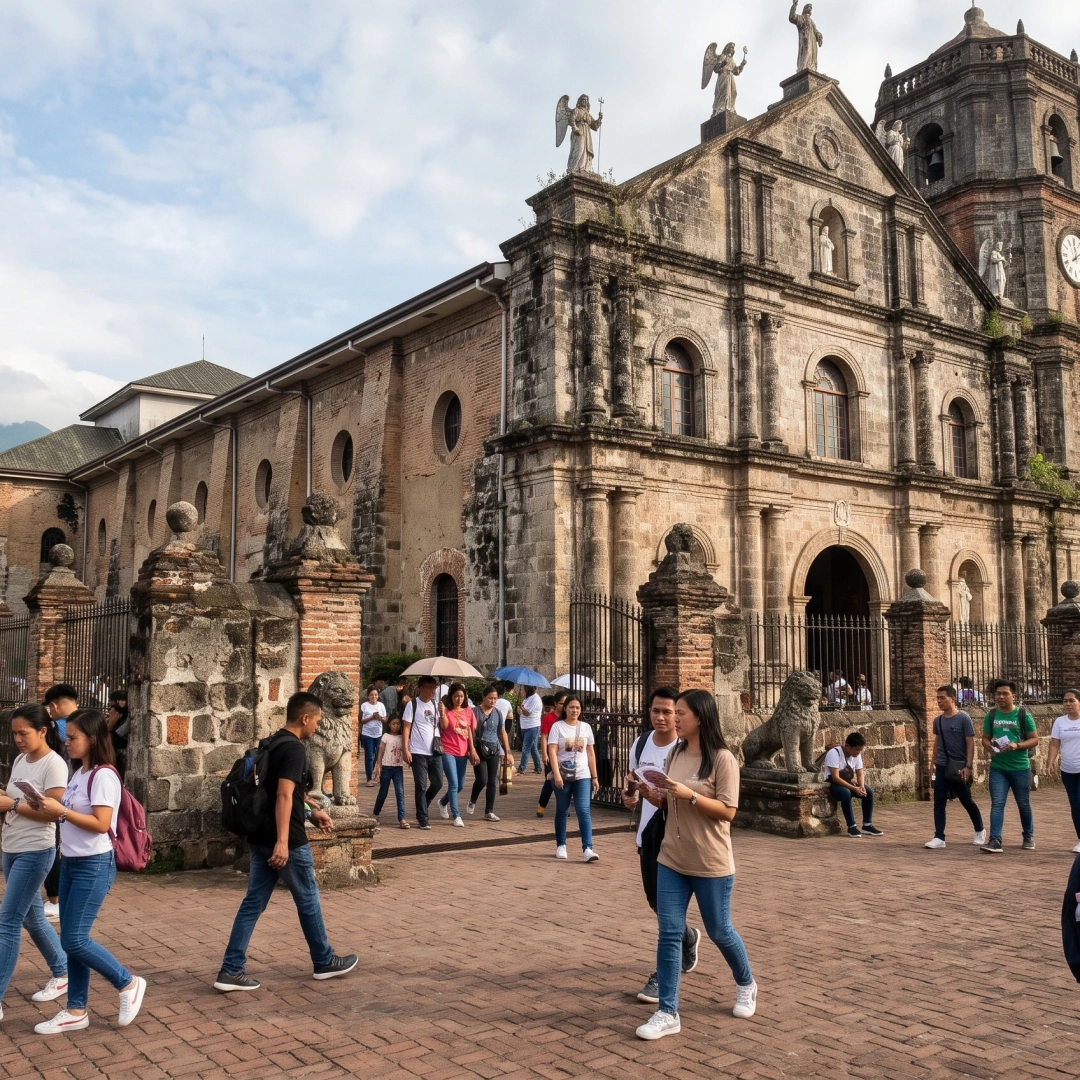
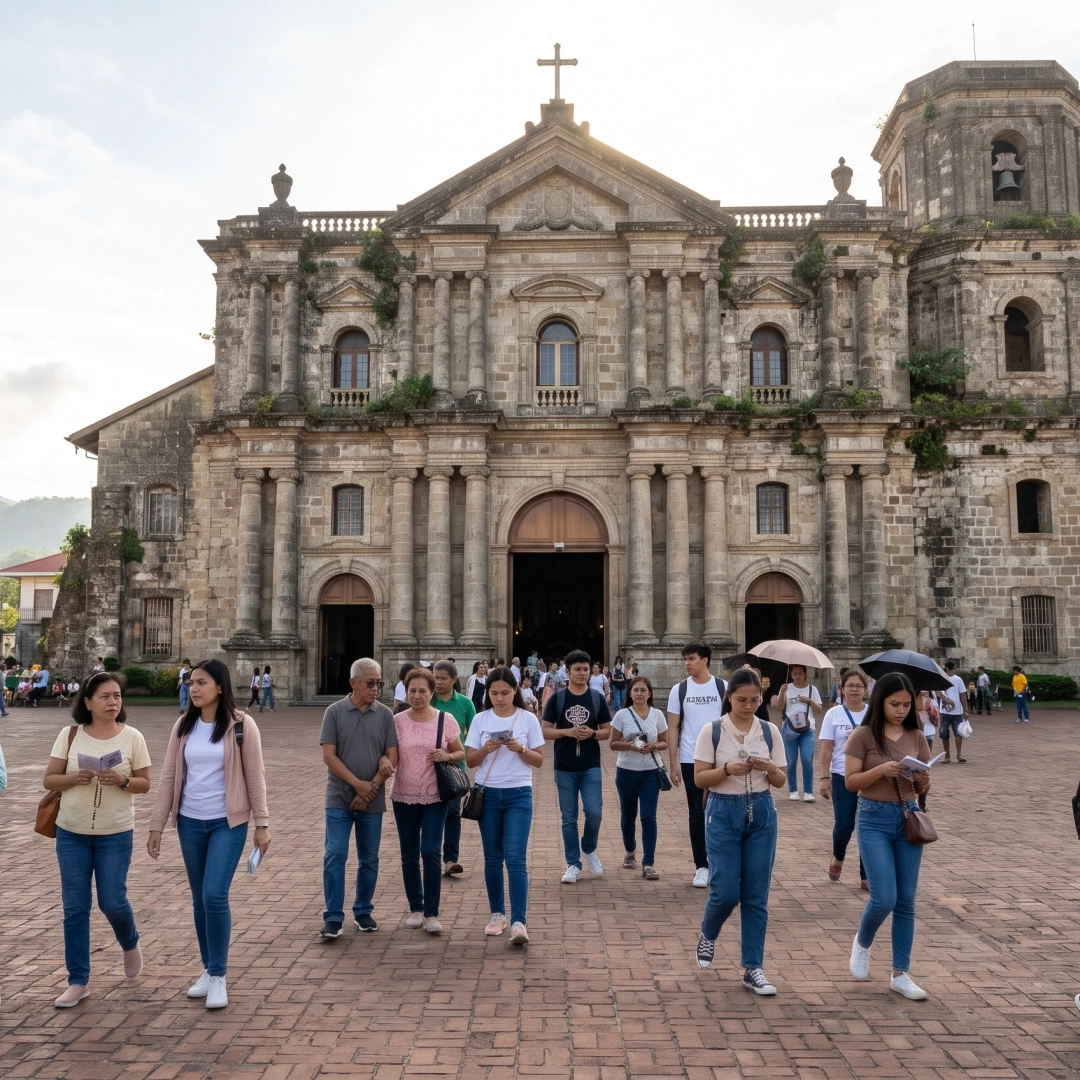
Crowning a gentle hill overlooking the heritage town of Taal, the Minor Basilica of St. Martin of Tours commands awe before a single foot crosses its threshold. Measuring an astonishing 96 meters long and 45 meters wide, this monumental Baroque edifice holds the distinction of being the largest Catholic church in Asia. Crafted from pale coral stone and weathered adobe, its twin-tiered facade of classical columns and stately arches feels both majestic and welcoming.
Its story is one of resilience forged in fire and ash. After the catastrophic 1754 eruption of Taal Volcano devastated the original settlement and church in old San Nicolas, the faithful relocated to higher ground and raised this grand basilica as a lasting testament to unshakable hope. Stepping into its cavernous nave, pilgrims are met with cool stillness, towering pillars, and a silver-tabernacled sanctuary dedicated to St. Martin, the bishop remembered for sharing his cloak with the poor.
“Lord, like St. Martin of Tours, clothe our hearts in charity and courage. Help us rebuild what trials have shaken, and teach us to share our blessings generously with those in need.”
Archdiocesan Shrine of Our Lady of Caysasay
Jewel of the Pansipit River & the Sacred Well
A short walk down the historic San Lorenzo Ruiz Steps from Taal Basilica leads to one of the most tender Marian sanctuaries in the country. Built in the 17th century from pale coral stone, the Archdiocesan Shrine of Our Lady of Caysasay shelters a tiny, luminous wooden image of the Immaculate Conception—barely a foot tall—that was miraculously discovered glowing in the nets of fisherman Juan Maningcad in the Pansipit River in 1603.
Devotion here is deeply intertwined with the nearby Sta. Lucia Well (Banal na Pook), where tradition holds the Virgin Mary appeared to local maidens above twin crystal springs. For over four centuries, pilgrims have knelt beneath the shrine’s intimate vaulted ceiling and washed their brows with water from the sacred well, entrusting illnesses, family burdens, and quiet hopes to the Mother of Caysasay.
“Our Lady of Caysasay, Star of the River, shine upon the troubled waters of our lives. Intercede for our families and lead us gently into the peace of your Son.”
Metropolitan Cathedral of San Sebastian
“Lipa Cathedral” — Heart of the Archdiocese of Lipa
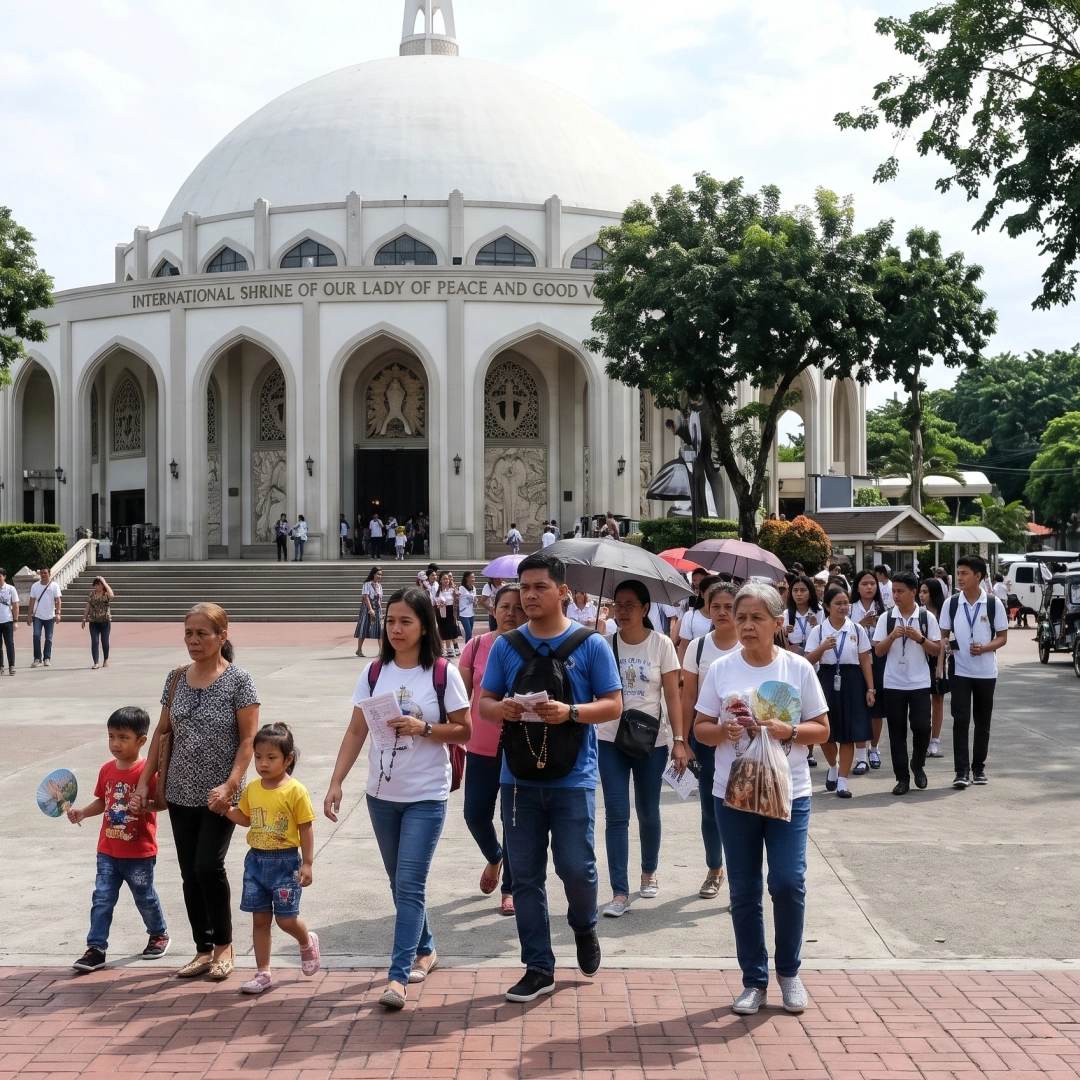
Rising gracefully at the heart of Lipa City stands the Metropolitan Cathedral of San Sebastian, the mother church and spiritual seat of the Archdiocese of Lipa. Originally founded by Augustinian friars in 1605 along the shores of Taal Lake, the parish was forced to relocate inland to higher ground after the devastating 1754 volcanic eruption—carrying its faith and sacred vessels to the cool uplands where the cathedral thrives today.
Pilgrims are immediately drawn upward by its grand circular dome, richly detailed Romanesque-Baroque facade, and towering ornate bell tower that has called generations to Mass. Inside, sunlight filters onto an exquisite silver-lined main altar and hand-painted ceiling murals, offering an atmosphere of solemn majesty worthy of the martyred St. Sebastian.
“St. Sebastian, steadfast witness of Christ, strengthen our faith when we grow weary. Grant us perseverance in every trial and fidelity to the Gospel.”
Minor Basilica of the Immaculate Conception
Four Centuries of Steadfast Marian Devotion
Standing sentinel over the historic plaza of Batangas City, the Minor Basilica of the Immaculate Conception embodies more than 400 years of unbroken Christian heritage. Its humble origins trace back to 1578, when Augustinian missionary Fr. Diego de Mojica erected a modest church of wood and nipa. As the town grew in faith and stature, the community began rebuilding in enduring stone in 1686, completing its solid reef-stone transept in 1706.
Flanked by its historic fortress-like convent—designed in centuries past to shelter townsfolk in times of peril—the basilica exudes quiet strength. Elevated to the rank of Minor Basilica in 1945, it remains a beloved refuge where city workers, students, and pilgrims alike pause beneath the gaze of the Immaculate Virgin to offer whispered rosaries.
“O Mary, conceived without sin, be our fortress of purity and grace. Guard our homes and communities, and keep our hearts ever open to God’s will.”
Archdiocesan Shrine & Parish of St. Joseph the Patriarch
Masterwork of Fr. Manuel Blanco & Sanctuary of the Quiet Guardian
With more than 250 years of heritage dating back to its founding in the 1760s, the Archdiocesan Shrine of St. Joseph the Patriarch in San Jose is a hidden treasure of Baroque grace. Its sturdy masonry church was erected in 1812 under the dedicated stewardship of Fr. Manuel Blanco, O.S.A.—the celebrated Augustinian priest and scholar revered as the author of Flora de Filipinas, the first comprehensive botanical treatise of the archipelago.
Approaching the patio, visitors admire its stately multi-tiered 19th-century belfry before stepping inside to behold a lovingly restored painted ceiling depicting sacred scenes in luminous hues. At the heart of the sanctuary, six rounded columns encircle the altar of St. Joseph, creating an intimate temple-within-a-temple where fathers, workers, and pilgrims seek the quiet protection of the Guardian of the Holy Family.
“St. Joseph, humble carpenter and faithful protector, bless the work of our hands. Watch over our loved ones and teach us to listen to God in quiet obedience.”
Immaculate Conception Parish Church
Bauan — Shrine of the Miraculous Holy Cross
Nestled near the waters of Batangas Bay, the centuries-old Immaculate Conception Parish Church of Bauan holds a treasured place in the spiritual life of Southern Tagalog. Beyond its sweeping arches and serene nave, the parish is renowned as the sacred home of the miraculous Holy Cross of Bauan—one of the revered “Magkapatid na Krus” (Sibling Crosses) alongside the famed Cross of Alitagtag.
Crafted from dark, fragrant anubing wood and adorned in gleaming silver and gold, the Holy Cross has drawn generations of devotees from every corner of Luzon. Through centuries of storms, wars, and personal afflictions, pilgrims have gathered here—especially during the joyous Subli festivities—to seek healing, protection, and the quiet strength that flows from the Cross of Christ.
“We adore You, O Christ, and we bless You, because by Your Holy Cross You have redeemed the world. Shield us from harm and turn our sorrows into songs of hope.”
St. Raphael the Archangel Parish Church
Calaca — A Blessed Finale of Healing & Safe Passage
Our sacred seven-church journey concludes in western Batangas at the centuries-old St. Raphael the Archangel Parish Church in Calaca. Cradling the revered, miraculous image of St. Raphael—the Archangel whose very name means “God Heals”—this welcoming sanctuary has long been a spiritual harbor for the sick, the weary, and those embarking on new chapters of life.
Honored throughout Catholic tradition as the Patron Saint of Healing and Travelers, St. Raphael provides the most fitting final stop for any Batangas pilgrimage. Here, as afternoon light softens across the altar, pilgrims lay down the fatigue of the road and ask for physical restoration, spiritual peace, and safe passage home.
“St. Raphael the Archangel, medicine of God and companion of travelers, heal our wounds of body and spirit, and walk beside us on our journey home.”
Preparing Heart & Footsteps
Pilgrimage Route & Practical Visita Iglesia Tips
Thoughtful guidance for a peaceful, prayerful day across Batangas.
Lipa Cathedral → San Jose → Batangas City → Bauan → Taal Basilica → Our Lady of Caysasay → Calaca
Begin Early in the Morning
Depart between 5:30 AM and 6:30 AM to enjoy cooler air, lighter highway traffic, and quiet morning Mass schedules before midday heat arrives.
Wear Modest, Breathable Attire
Honor the sanctity of each church with shoulders and knees covered. Lightweight cotton fabrics and comfortable walking shoes are ideal for historic stone steps.
Bring Water, a Rosary & Prayer Guide
Pack a refillable water bottle, a folding fan or umbrella, your rosary, and a small notebook for personal prayer intentions at every stop.
Observe Silence in the Sanctuaries
Silence mobile phones before entering, refrain from flash photography during liturgy, and spend a few unhurried minutes in stillness before the Blessed Sacrament.
Guided Spiritual Journey
Answer the Call of the Sacred Road
Whether for your parish community, family thanksgiving, or a quiet personal Visita Iglesia, allow us to help arrange a prayerful, well-paced pilgrimage through the seven historic churches of Batangas.
✝ Request for PilgrimageCustom group & family itineraries • Prayer guides included